
January 2025 - Article
Building innovative Cadex products requires vision and imagination, a skill that is not taught in school. Never did we have so many developments on the drawing board as now to measure battery life and share performance with users and fleet supervisors. The Universal Supervisor Charger (USC) with Cloud Analytics is one of these products making battery performance transparent.
Standalone ModeThe USC is a diagnostic charger that assures enough battery capacity, governed by the built-in Target Selector. Meeting capacity requirements illuminates the green SoH Light; amber calls for calibration. The USC supports regular and smart batteries; however, diagnostic functions are limited to smart batteries. |
 |
 Figure 3: Target Selector sets performance |
Target SelectorThe Target Selector serves as a gatekeeper that calls for calibration when the capacity falls below a set target with replacements when the battery does not recover. Common target settings are:
|
Cloud Analytics
Connecting the USC to a PC makes battery performance visible. CadexLink presents a local system that connects to the host by USB ports, while CadexCloud interfaces by Ethernet or Wi-Fi to store battery history in the cloud. Booth systems offer AirShip and battery validation programs. CadexLink is limited to available USB ports, while CadexCloud expands to a virtually unlimited number of service devices with ability to share performance data and do logistic analysis.
Battery ThumbnailsConnecting the USC to a PC presents battery state-of-function (SoF) by thumbnails with Fishbowl icons as illustrated in Figure 4. The outer ring of the Fishbowl shows state-of-charge while the black ceiling on top tracks capacity loss that slowly moves to the Target Selector redline. The Fishbowl also displays Leftover Charge that should be 10–20% at the end of a day. Leftover charge resembles carrying enough fuel in an aircraft to secure a safe landing. |
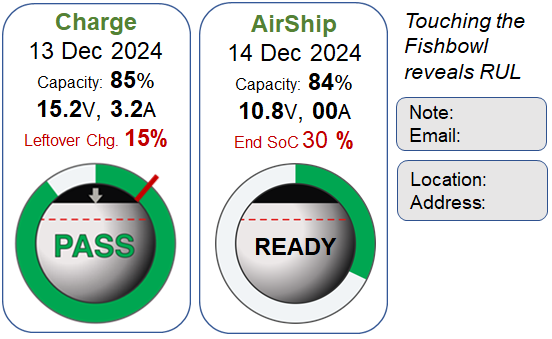 Figure 4: Battery thumbnails with Fishbowl |
Remaining Useful Life
Touching the Fishbowl reveals the Remaining Useful Life (RUL) of a battery by noting capacity decline towards the red-line of the Target Selector. Data creating the RUL chart is taken from the Smart Battery Summary shown in Figure 6.

Purchase AssistCadexCloud identifies fleet batteries that approach end-of-life. Securing spares to replace retirees, the buyer simply enters the minimal required capacity levels, batteries the USC will identify when charging. |
 Figure 7 Purchase Assist identifies weak batteries |
Battery Endurance Loop
The Battery Endurance Loop minimizes human interaction in optimizing the battery fleet. Only good batteries are kept; weak packs are identified and replaced. The Loop enables setting a sweet spot between optimal reliability and economics. The Loop lowers total cost of ownership and protects the environment by utilizing each battery fully and replacing before failure.

The battery remains the weakest link with statistics revealing that 50% of system failures are caused by the battery. Cloud Analytics simplifies battery diagnostics with minimal user intervention. Advancements to make battery performance transparent took longer to perfect than other technologies.